
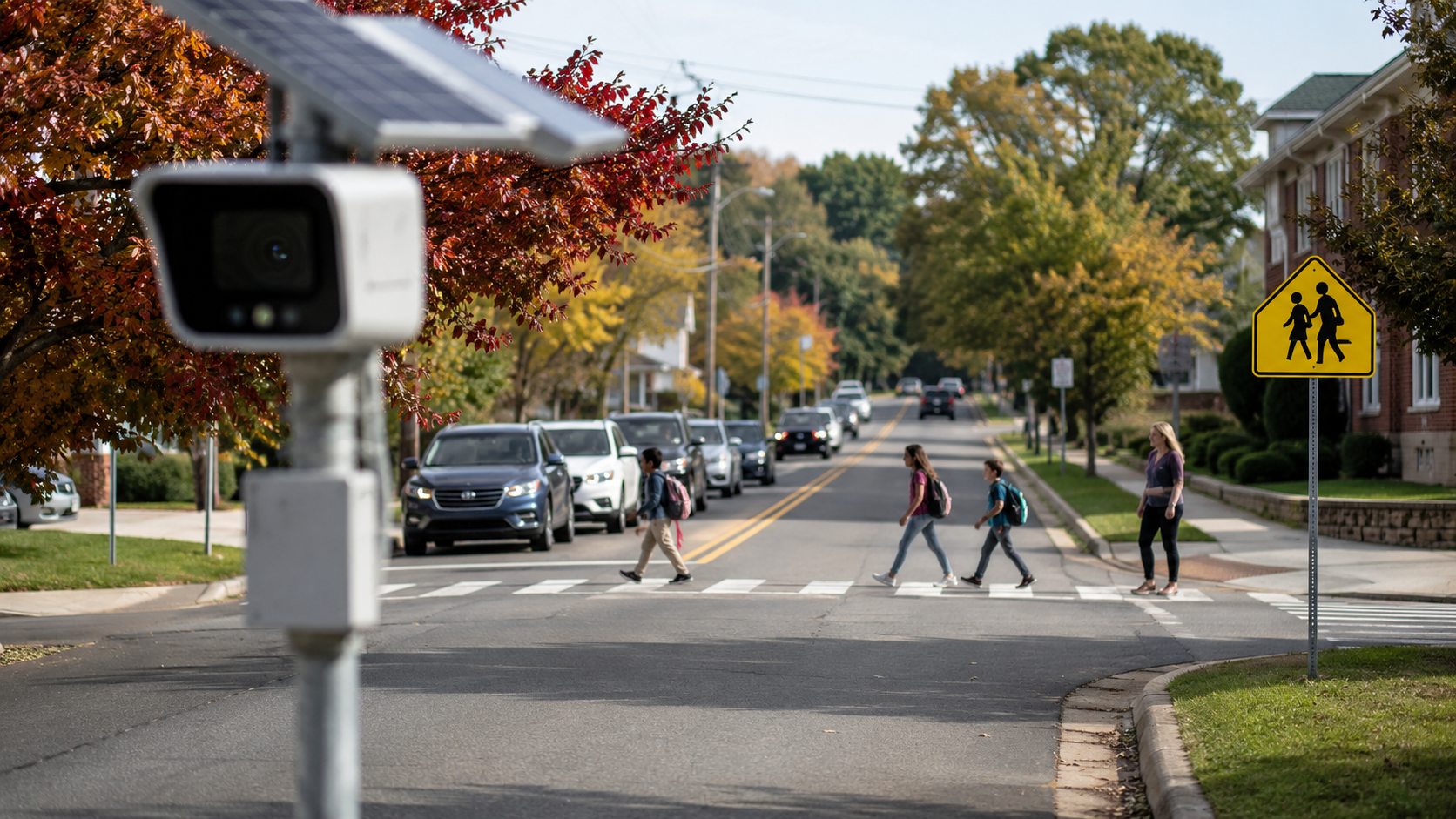
AI traffic cameras in Virginia became legal on July 1, 2026, and with Fairfax County Public Schools back in session, the first wave of them is now watching school crossing zones across the Commonwealth. The law was written to protect pedestrians, and it should. But it also quietly changed something else: what evidence exists after a crash, and who it helps.
Here is what the new law actually does, where these systems can be used, and why it matters if you are ever hurt at a monitored intersection.
What the New Law Actually Does
Senate Bill 84 amended Virginia Code § 46.2-882.1 to authorize automated systems that detect two specific violations: running a stop sign, and failing to yield to a pedestrian in a crosswalk. These join the photo speed monitoring devices Virginia localities were already permitted to operate.
The technology behind them is new. The vendors preparing to deploy in Virginia use artificial intelligence to flag potential violations from video, which is then routed to a human officer for review. No citation goes out unless a law enforcement officer looks at the footage and decides one is warranted. The statute itself is technology-neutral, meaning it authorizes the monitoring system without dictating how the detection happens.
AI Traffic Cameras in Virginia Are Limited to Specific Zones
This is not blanket surveillance, and the geographic limits are worth understanding. Under the current statute, these systems can only be deployed in highway work zones, school crossing zones, high-risk intersection segments, safety red zones, and on National Park highways.
Signage is required so drivers know a system is operating, and localities face rules on calibration, data retention, and public reporting. Revenue from civil penalties must first cover the cost of running the program, with anything left over restricted to traffic safety, speed management, bicycle and pedestrian safety, and public transit improvements.
For Northern Virginia families, the practical takeaway is that the school zones your children walk through are among the first places these systems are going.
Citations Are Civil Penalties, Not Points
If you receive one of these citations in the mail, it is a civil penalty. It does not add points to your driving record, and it is not supposed to affect your insurance rates the way a moving violation would. That is a meaningful distinction, and it is also why some drivers underestimate what these systems are capable of producing.
Why AI Traffic Cameras in Virginia Matter to Injury Claims
Virginia is one of a small handful of states that still applies pure contributory negligence. If you are found even one percent at fault for a crash, you can be barred from recovering anything at all. That rule makes evidence unusually decisive here compared to most states.
Automated systems create records. Video showing another driver rolling through a stop sign or failing to yield in a crosswalk is exactly the kind of objective evidence that resolves a disputed liability case. In a jurisdiction where a single percentage point of fault can end a claim, footage that removes the argument entirely is enormously valuable, and our car accident attorneys in Fairfax expect these records to become a routine part of crash investigation over the next few years.
The Flip Side: These Systems Record Everyone
Honesty matters here. The same camera that captures the other driver captures you. Footage that proves someone blew a stop sign may also show you were traveling faster than you remembered, or that you entered the intersection on a stale yellow. Under contributory negligence, that cuts both ways.
There is a second data stream to be aware of as well. Virginia also launched its Intelligent Speed Assistance Program on July 1, 2026, allowing judges to order GPS-based speed-limiting devices as an alternative to license suspension for certain reckless driving convictions. Those devices log every attempt to bypass or tamper with the system. If an at-fault driver was enrolled, that record can establish a pattern of conscious disregard for safety. If the device was functioning and the driver was at the posted limit, that same record may undercut a speed-based negligence theory.
What to Do After a Crash Near a Virginia Traffic Camera
The evidence is only useful if someone preserves it. Retention windows are limited, and localities are not obligated to hold footage indefinitely on the chance a civil claim shows up later.
If you are in a collision at an intersection, in a work zone, or in a school crossing zone, take these steps:
- Photograph the scene, including any camera equipment and posted signage you can see
- Note the exact intersection and the time of the crash
- Call the police and make sure a report is filed, even for a minor collision
- Get contact information for witnesses before anyone leaves
- See a doctor promptly, even if you feel fine
- Contact an attorney quickly so a preservation request can go out before footage is overwritten
That last point is the one people miss. Waiting weeks to make a call can mean the recording that would have settled your case no longer exists.
The Bigger Picture
Virginia recorded 126 pedestrian deaths and 1,719 pedestrian injuries in 2024. Automated enforcement is one response to that, and safety advocates broadly support it. Whether you find these systems reassuring or intrusive, they are here, and they are generating records that did not exist eighteen months ago.
If you are hurt in a crash anywhere in Northern Virginia, our Fairfax injury team can help you identify what evidence exists and move to preserve it. Hilton & Somer, LLC has represented Virginia, DC, and Maryland families since 1965. Call (703) 560-0700 for a free consultation or request a case evaluation online. All cases are handled on contingency, which means you pay no attorney fees unless we are successful.
Planning a weekend out this season? See our guide to the 2026 fall event calendar in Fairfax County.
References
- Virginia General Assembly. “Code of Virginia § 46.2-882.1, Title 46.2 Motor Vehicles 2026 Updates.” law.lis.virginia.gov
- AAA Clubs of Virginia. “AAA Celebrates Traffic Safety Wins in 2026 Virginia General Assembly Session,” June 10, 2026. cluballiance.aaa.com
