
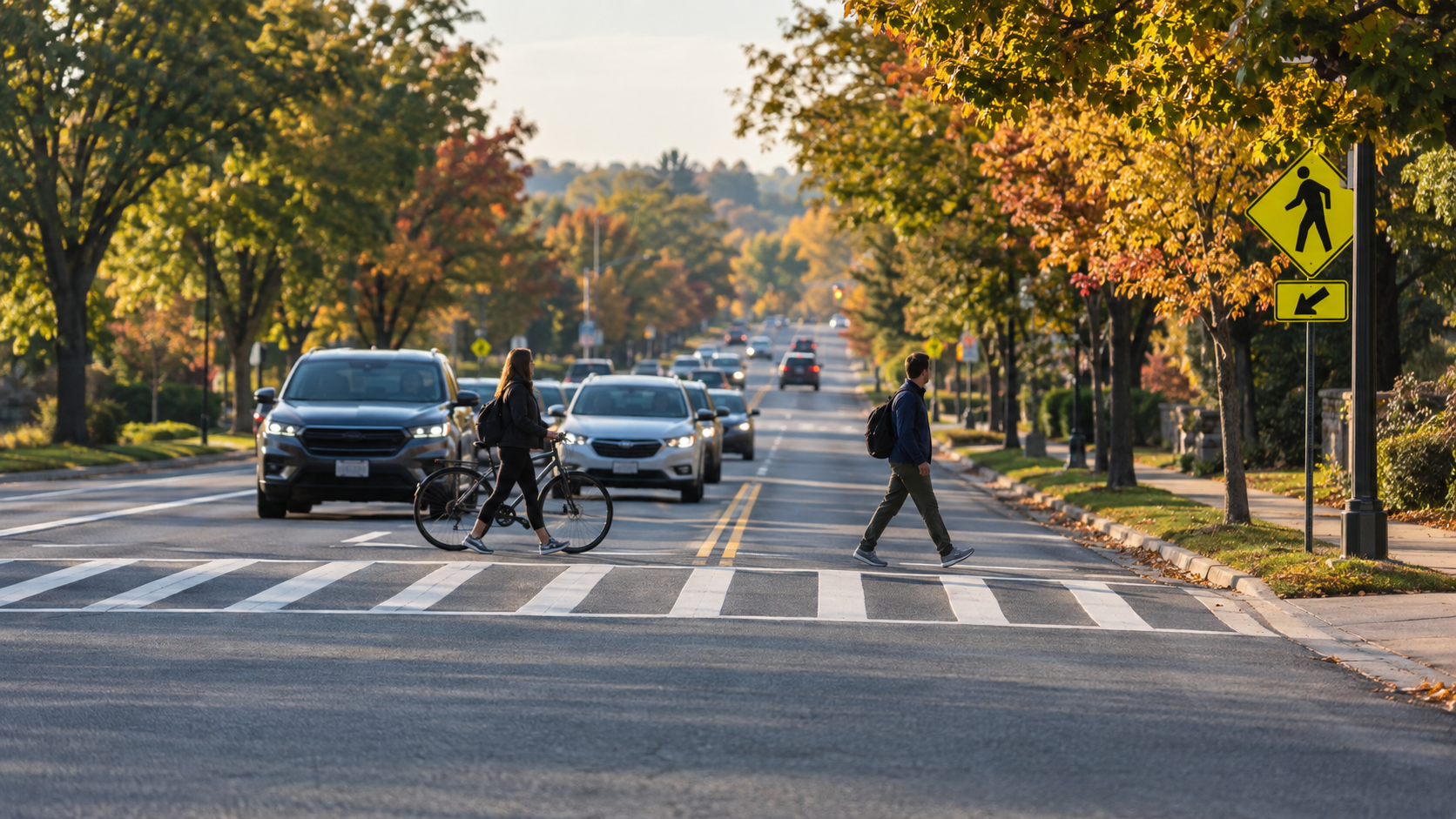
Vulnerable road user zones are coming to Virginia, and the first formal step just happened. A new act of the General Assembly directs the Virginia Department of Transportation to build the criteria for designating them, with a report due to four legislative committee chairs no later than November 1, 2026. That is about five weeks away.
Most drivers have never heard the term. It is worth understanding now, because the framework being drafted this fall will shape where the Commonwealth concentrates enforcement, engineering money, and legal attention for years.
What the New Act Requires
Chapter 906 of the 2026 Virginia Uncodified Acts directs VDOT to develop criteria and recommendations for designating safety zones in areas that have seen elevated rates of crashes, injuries, or fatalities involving pedestrians or cyclists.
The act is specific about what VDOT has to weigh. The Department must consider crash data, injury reports, severity statistics, and fatality statistics from the previous five years. It must also evaluate potential safety improvements and how to pay for them, along with the fiscal implications of both additional automated enforcement penalties and any fines or costs tied to related criminal convictions.
The completed report goes to the Chairs of the Senate Committees on Finance and Appropriations and Transportation, and the House Committees on Appropriations and Transportation.
Vulnerable Road User Zones Would Target the 25 Worst Segments
The most concrete instruction in the act is a ranking exercise. VDOT must identify the 25 highway segments in the Commonwealth with the highest rates of crashes, injuries, or fatalities involving vulnerable road users.
That is a short list for a state with tens of thousands of miles of road. If Northern Virginia corridors land on it, and local crash history suggests several may, those stretches become the leading candidates for whatever enforcement and engineering changes follow.
This is also the part worth watching between now and November. A designation framework built around 25 named segments creates a public record of which roads the Commonwealth already knows are dangerous.
Who Counts as a Vulnerable Road User
Virginia already defines the term, and the definition is broader than most people assume. Under Virginia Code § 46.2-816.1, a vulnerable road user includes a pedestrian, the operator or passenger of a bicycle, an electric personal assistive mobility device, an electric power-assisted bicycle, a wheelchair or wheelchair conveyance, a skateboard, roller skates, a motorized skateboard or scooter, or an animal-drawn vehicle, as well as anyone riding an animal.
That sweep matters. E-scooter riders, e-bike commuters, and people using mobility devices all fall inside the same protected category as someone on foot in a crosswalk.
The same statute already carries teeth. Operating a motor vehicle in a careless or distracted manner that proximately causes serious bodily injury or death to a vulnerable road user lawfully on the highway is a Class 1 misdemeanor.
Automated Enforcement Is Explicitly on the Table
One clause in the act deserves particular attention. VDOT is directed to assess the fiscal implications of additional automated traffic enforcement civil penalties inside any designated zone.
The General Assembly is not asking whether cameras might eventually be considered. It is asking what the revenue and cost picture looks like when they are deployed there. That follows directly from the automated enforcement law that took effect on July 1, which authorized AI-assisted systems to detect stop sign and crosswalk violations in a defined set of locations.
Read together, the direction is clear. Virginia is building the legal architecture to expand camera enforcement from school and work zones into corridors identified by crash data.
Why This Matters for Injury Claims in Virginia
Virginia remains a pure contributory negligence state. An injured person found even one percent at fault can be barred from recovering anything. That rule makes documentation unusually decisive here compared with most of the country.
A formal safety zone designation would create exactly that kind of documentation. If a corridor has been publicly identified by the Commonwealth as having elevated rates of pedestrian and cyclist crashes, that record exists independently of any individual case. It speaks to notice, to foreseeability, and to what a reasonable driver should have anticipated on that stretch of road.
Automated enforcement inside those zones would add a second layer: objective video of what actually happened. Our pedestrian and bicycle accident attorneys expect both to become routine parts of how these cases get investigated.
Northern Virginia’s Stake in the Safety Zone Report
This region has a direct interest in what VDOT submits. Fairfax County has spent the fall in an active conversation about pedestrian infrastructure, and the Board of Supervisors recently restored crossing guard funding after residents pushed for it. We covered that in our guide for parents and drivers this school year.
Local advocates have argued for years that the design of corridors like Route 29 and the Fairfax County Parkway encourages highway speeds, and that lighting gaps leave people walking after dark harder to see. A data-driven designation process is the mechanism that could finally attach money and enforcement to those arguments.
The November 1 report is public-facing by design. It will be worth reading when it lands.
What to Do If You Are Hurt While Walking or Biking
Whatever the framework ends up looking like, the steps after a crash have not changed:
- Call the police and make sure a report is filed, even if injuries seem minor
- Photograph the scene, including crosswalk markings, signage, lighting, and sight lines
- Note the exact location and time, since corridor-level crash history may become relevant
- Get contact information for witnesses before anyone leaves
- Seek medical attention promptly, because some injuries present hours or days later
- Speak with an attorney before giving a recorded statement to any insurer
That last point carries extra weight in a contributory negligence state. An offhand remark about what you were doing before the collision can be used to argue you contributed to it.
The Bottom Line
Vulnerable road user zones do not exist in Virginia yet. What exists is a legislative directive to figure out where they should go and what they should cost. The answer arrives November 1, and it will likely shape which corridors see cameras, funding, and engineering changes first.
If you or a family member has been injured while walking, biking, or riding in Northern Virginia, Hilton & Somer, LLC has represented Virginia, DC, and Maryland families since 1965. Call (703) 560-0700 for a free consultation or request a case evaluation online. All cases are handled on contingency, which means you pay no attorney fees unless we are successful.
References
- Virginia General Assembly. “2026 Uncodified Acts, Chapter 906: Department of Transportation; criteria and recommendations for the potential designation of vulnerable road user safety zones; report.” law.lis.virginia.gov
- Code of Virginia. “§ 46.2-816.1. Careless driving and infliction of injury or death on vulnerable road users; penalty.” law.lis.virginia.gov
