
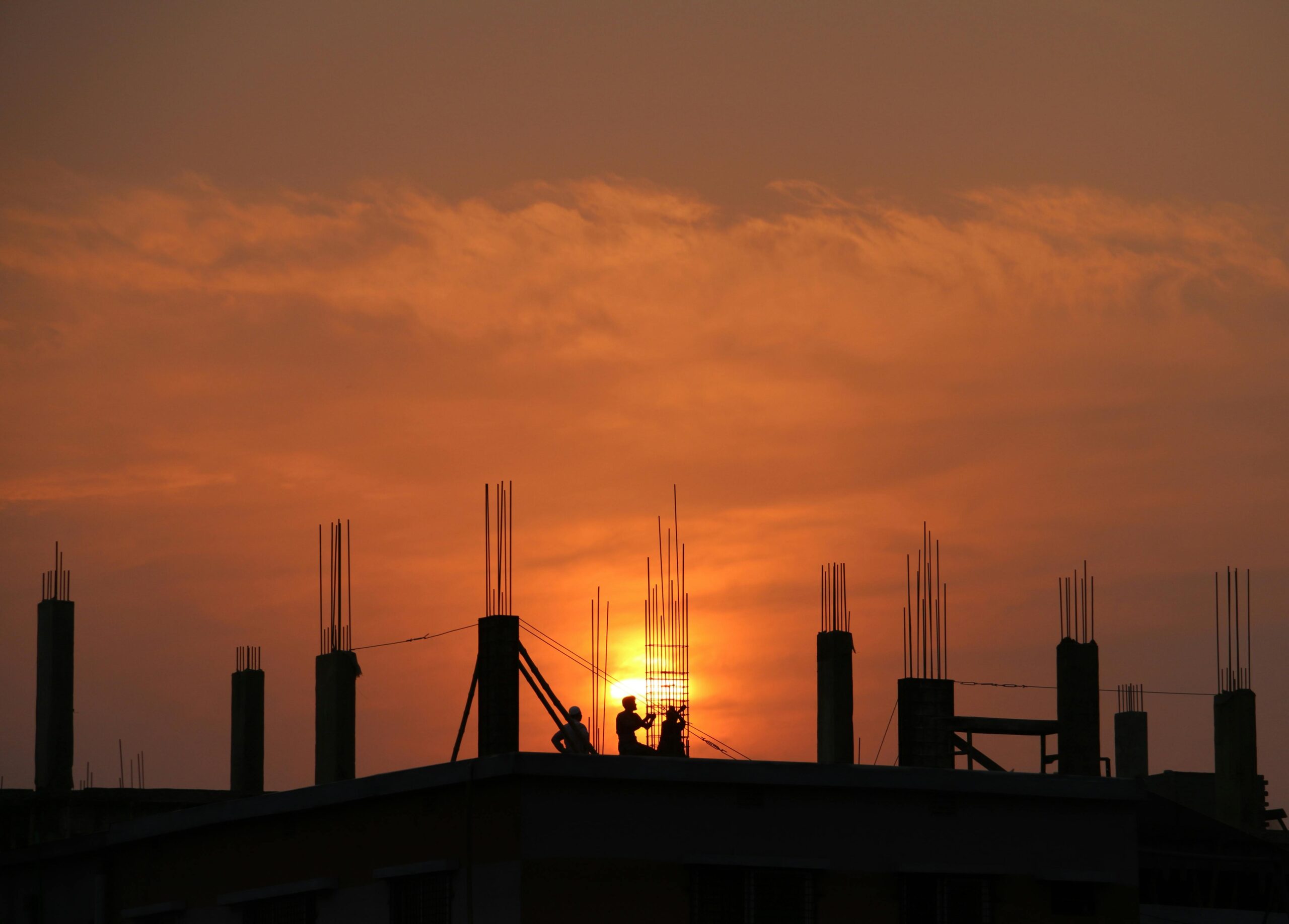
As leaves change color and daylight shortens, construction sites face a new set of hazards. Wet surfaces from autumn rains, earlier sunsets that reduce visibility, and the industry’s typical end-of-year push to finish projects combine into a “perfect storm” for accidents. Employers, property owners, and manufacturers all have legal responsibilities when negligence plays a role — knowing who may be liable is essential for injured workers and bystanders alike.
Why fall conditions raise risk
Autumn brings more frequent rain and cooler temperatures that make surfaces slick and tools harder to handle. Rain increases slip-and-fall risks and can create electrical hazards when power tools or temporary wiring become wet. Research into seasonal trends in construction shows clear relationships between weather and accident rates — many studies find spikes in injuries tied to changing weather and shorter daylight hours.
Early sunsets pose a second problem. Reduced natural light increases the chance a worker won’t see trip hazards, unstable ground, or moving equipment — especially on sites that rely on daylight for safe operations. OSHA requires employers to assess and control recognized hazards, and has specific guidance that dangerous operations should be suspended when weather creates unsafe conditions. Proper lighting, posted warnings, and work suspension during hazardous weather are common safety expectations.
The end-of-year rush
Finally, the fall often brings scheduling pressure: clients and contractors push to finish projects before winter or before fiscal year closeouts. Haste increases risk — crews may skip safety checks, work overtime while fatigued, or take shortcuts on fall protection and site housekeeping. These human-factor risks frequently turn routine hazards into catastrophic accidents.
Who can be liable in Virginia?
Liability depends on the specific facts, but several parties commonly face legal exposure:
- Employers and contractors — Contractors are responsible for training, equipment maintenance, site supervision, and enforcing safe work practices. When a contractor’s failure to follow OSHA/VOSH standards leads to injury, the employer can be liable through negligence or (for non-employee victims) other civil claims. (Virginia’s VOSH enforces state workplace safety rules and investigates accidents.)
- Property owners — If hazardous site conditions on a property (inadequate lighting, unmarked hazards, poor drainage) contribute to an injury, owners may face premises liability claims from non-employees and, in some cases, third-party claims even when the injured person is a worker. Virginia law allows injured workers to pursue third-party suits against responsible non-employers while still collecting workers’ comp benefits.
- Equipment or tool manufacturers — Faulty design, manufacturing defects, or failure to warn can produce product-liability claims against manufacturers or distributors. Virginia’s product liability definitions and standards outline when a manufacturer can be held responsible for injuries caused by defective equipment.
Taking the next step
If you or a loved one was hurt on a construction site this fall, documenting the scene (photos of lighting, wet conditions, equipment, and timestamps), preserving incident reports, and seeking medical attention are immediate priorities. For help understanding liability and protecting your rights in Virginia, contact an experienced personal injury attorney who handles construction accidents. Hilton & Somer has resources on construction-zone liability and can help evaluate whether contractors, property owners, or manufacturers are responsible for your losses.
Hilton & Somer, LLC: Virginia, Maryland and Washington, DC Personal Injury Attorneys
If you have suffered an injury, don’t go through it alone. Help is available today. Get in touch with the Personal Injury Attorneys at Hilton & Somer, LLC today to discuss your case with one of our Virginia, Maryland, or Washington, D.C. Attorneys. You can contact us toll-free at (703) 560-0700.
References:
https://ace.il.pw.edu.pl/pdf-134083-106081?filename=Influence+of+the+seasons.pdf
https://www.osha.gov/enforcement/directives/std-03-00-001?
https://doli.virginia.gov/wp-content/uploads/2025/04/Virginia-FFY24-SOAR.pdf
https://law.lis.virginia.gov/vacode/title38.2/chapter51/section38.2-5101/
